Last year, a friend texted me a selfie from a clinic waiting room.
“Have you heard of jet plasma?” And then: “Am I about to get zapped?”
I laughed. Because I’ve seen that look. The “I want better skin but please don’t cook my face” look.
So let’s talk like real people. No fluff. No magic. Just what a jet plasma device actually is, what it does, and what it doesn’t do.
Table of Contents
Jet plasma
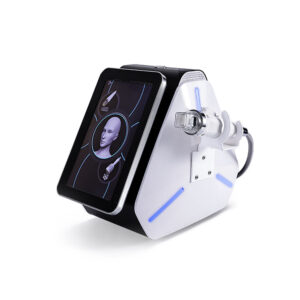
A jet plasma device shoots a tiny stream (a “jet”) of energized gas toward your skin.
That energized gas is plasma.
Think of plasma like a super-charged state of air or inert gas. Not a laser. Not a needle. Not a chemical peel. More like… controlled “electric air” that the device aims at the skin’s surface.
Sounds sci-fi. It kind of is. But it’s also very real tech that clinics use for skin care treatments.
And no, you don’t get electrocuted. You’d run out of clients fast if that happened.
What is plasma?
You know solids, liquids, gases. Right?
Plasma is the next step. The “charged” step.
When you energize a gas enough, you create a mix of ions and electrons. That mix can interact with skin in interesting ways. It can create reactive molecules at the surface, nudge certain skin processes, and help with hygiene on the skin.
That’s the core idea. The device makes plasma. The jet delivers it.
Why do people call it “cold plasma”?
Because the device aims to keep the treatment “non-thermal” (or low-heat) at the skin surface.
Translation: it shouldn’t feel like a burn.
You might feel warmth. You might feel a tingle. Some devices feel like a little buzzing breeze.
But if you feel serious heat? Something’s off. Or the settings don’t match your skin.
What does a jet plasma device do to skin?
This is where clinics start tossing around big promises. I’m not doing that.
Here’s the realistic version.
Jet plasma treatments usually target:
- Surface bacteria control (people talk about acne-prone skin for this reason)
- Overall skin “freshness” (tone looks clearer for some people)
- Texture support (fine roughness, not deep scars)
- Product absorption support (some providers pair it with serums)
- Redness and irritation management (depends on the person and protocol)
Do you hear my cautious tone? Good. Skin reacts differently person to person. That’s not me being vague. That’s me being honest.
If someone tells you it will fix everything in one session, smile politely and walk out.
Jet plasma vs “plasma pen” (people mix these up)
This matters. A lot.
Jet plasma:
- Works with a plasma stream delivered through a tip/nozzle
- Often focuses on non-contact or near-contact treatment
- Usually aims for lower heat at the skin surface
Plasma pen (the popular “spot” devices):
- Creates a tiny arc that can create micro-injuries on purpose
- Often targets spots, tightening effects, or localized areas
- Can leave dots, scabs, and visible downtime
People lump them together because they both say “plasma.” They don’t behave the same way.
If your provider says “no downtime” and then hands you a device that makes dots and crusting… you just entered the wrong movie.
What a session feels like
Let me paint the picture.
You show up. They cleanse your face. They might degrease it. They might do a quick assessment under a lamp like they’re inspecting a diamond.
Then they start.
You’ll usually feel:
- A warm, prickly breeze
- A light snapping sensation (not always)
- A tingle around sensitive areas (nose, upper lip, jawline)
Most people describe it as “weird but tolerable.” Which is honestly the best category of cosmetic treatment.
Afterward, your skin might look:
- Slightly pink
- A bit tight
- Kind of “polished”
You might also look exactly the same for a few hours. That happens too.
So… does it actually work?
Here’s the coffee-table truth.
Jet plasma can help some people see:
- Less “congested” looking skin
- A calmer look in breakout-prone areas
- A more even surface feel
- A small glow bump after a series
But it won’t:
- Replace filler
- Replace deep resurfacing
- Erase deep scars
- Lift skin like surgery
It’s not a face transplant in a wand. It’s a tool. A decent one, when used well.
The results depend on the protocol (and the operator)
I know, I know. Everyone says that.
But with devices like this, the “how” matters almost more than the “what.”
Settings, gas type (if the device uses a specific gas), treatment speed, distance from skin, how many passes, what they put on your face before and after…
All of that changes the outcome.
Same machine. Two clinics. Two totally different experiences.
Who should be careful?
If you’re pregnant, have an implanted electronic device (like a pacemaker), have uncontrolled skin conditions, or you’re on medications that make your skin extra sensitive, you should ask your doctor and your provider before you jump in.
Also, if you love tanning beds. Or you just baked on a beach all weekend.
Don’t do this on freshly angry skin. Your face doesn’t want a “bonus challenge.”
And if you have a history of pigment issues, bring that up early. Not after.
What should you ask before you book?
I like simple questions that force real answers.
Ask these:
- “What device are you using exactly?”
- “What’s the expected downtime for my skin type?”
- “How many sessions do most clients like me do?”
- “What should I avoid for 48 hours?”
- “What’s your plan if I react badly?”
If they can’t answer confidently, you don’t want them experimenting on your face.
Aftercare: keep it boring
Want the best chance at a calm recovery?
Do boring things.
- Gentle cleanser
- Basic moisturizer
- Sunscreen (every day, no excuses)
- Skip acids and retinoids for a bit if your provider tells you to
- Don’t pick, scrub, or “test” your skin with new products
Your skin loves calm. Your ego loves chaos. Pick calm.
Why clinics like jet plasma (the business angle)
I’ll be blunt.
Clinics like jet plasma because it can fit into:
- “Glow” packages
- Acne support programs
- Add-ons after facials
- Prep steps before other treatments
- Upsell moments with low downtime
And if you run a clinic, the best part isn’t the hype. It’s the repeatable, protocol-driven service.
Clients don’t need to fall in love with the word “plasma.” They need to fall in love with looking in the mirror two weeks later.
If you’re buying a jet plasma device for your clinic
Quick reality check. You don’t win by buying the fanciest machine. You win by building a safe, consistent protocol.
Here’s what I’d look for:
- Clear training and settings guidance (not vibes, not “try it out”)
- Consumables transparency (tips, gas requirements, maintenance)
- Safety features (stable output, good insulation, reliable handpiece)
- Service support (parts availability, repair turnaround)
- Documentation (manuals, contraindication list, treatment guides)
Also: test it on real staff first. If your team hates using it, your clients will never see it.
The honest bottom line
A jet plasma device is basically a skin-facing “plasma breeze” tool.
It can support clearer-looking skin, better texture feel, and calmer trouble areas for the right person. It can also do absolutely nothing if you expect miracles or if the clinic runs it like a random science fair.
Want my simplest advice?
Pick a provider who talks like a grown-up. Ask the boring questions. Do a series, not a one-off miracle session.
And if you want, tell me what you mean by “jet plasma” (some clinics use the term loosely). I’ll help you spot whether they’re offering true jet plasma, a plasma pen, or just marketing with a fancy word.